Source Music Playing Baby Walker for Travel, Play, and Learning
Explore 30 options for a music playing baby walker designed for travel, play, and learning. Buyers can compare features like foldability, materials, and customization to find the right supplier for their needs.
Key considerations
Products List


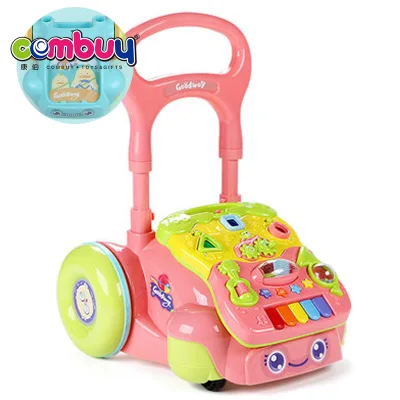


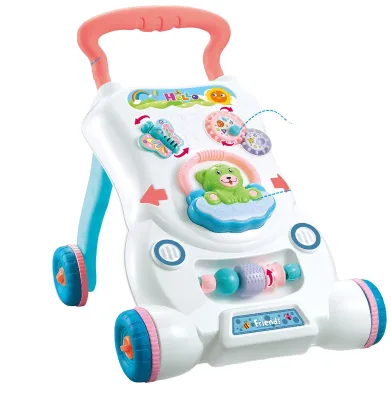


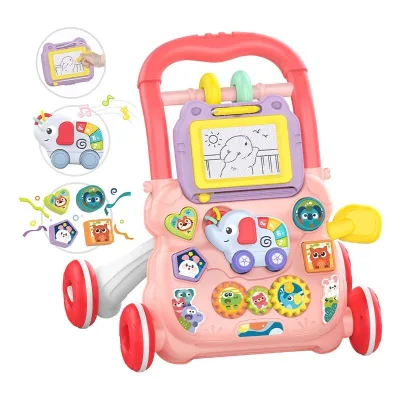

Comprehensive Sourcing Guide
Strategic Sourcing Guide for Music Playing Baby Walkers
Understanding Product Specifications and Variants
The market for music playing baby walkers presents a diverse array of configurations, each tailored to specific developmental stages and parental preferences. Based on current market observations, the core product category encompasses several distinct models, including the Musical Baby Walker-031T, Musical Baby Walker-018F, Baby Walker-029T, and various iterations labeled as BW-01, BW-05, BW-06, BW-07, and SC-02. A critical observation for buyers is the variation in functional attributes; while some units are classified simply as "Baby Walker," others are explicitly defined as "musical baby electric walker" or "musical walker." This distinction is vital for procurement planning, as electric variants may introduce different power requirements and safety considerations compared to manual push-walkers.
The physical specifications of these units vary significantly across the catalog. Dimensions for packaging and the units themselves are frequently customized, with observed carton sizes ranging from 374041 cm to larger configurations like 868652 cm and 824952 cm. Specific batch data indicates a package size of 77X45.5X44 cm with a gross weight of 11.800 kg per batch, while other models list a G.W./N.W. ratio of 11.80/9.50 kg. Material composition is predominantly plastic, though some listings reference "Stainless Baby Walker" attributes, suggesting potential metal reinforcement or component usage. The age range for these products is generally targeted at children between 2 to 4 years, though this should be verified against the specific model's structural integrity and weight capacity.
| Model Identifier | Primary Function | Packaging Type | Observed Carton Dimensions (cm) | Weight (kg) |
|---|---|---|---|---|
| Musical Baby Walker-031T | Musical Walker | 1PC/CTN | 7644.543 | 11.80 |
| Baby Walker-029T | Standard Walker | Color Box | 715662 | N/A |
| BW-06 | Electric/Musical | Boxed Packing | 374041 | N/A |
| BW-01 | Standard Walker | Customized | 868652 | N/A |
| SC-02 | Standard Walker | Customized | 715662 | N/A |
Buyers must note that "Customized" is a recurring attribute for size, packing, and standards. This flexibility allows for branding opportunities but requires clear communication of exact dimensions and material requirements to avoid production errors. The "Foldable" attribute is another key specification, offering logistical advantages for storage and shipping, which is particularly relevant for retailers with limited warehouse space.
Compliance and Certification Verification
Safety is the paramount concern when sourcing toys for infants and toddlers. In the context of baby walkers, regulatory compliance is non-negotiable. The supplied data explicitly mentions the EN71 certification, a European standard for safety of toys. This standard covers various aspects of toy safety, including mechanical and physical properties, flammability, and chemical migration. However, it is crucial to understand that the presence of a certification label on a product listing does not guarantee that every unit in a batch meets the standard. Buyers must verify that the specific model they intend to purchase has undergone independent testing and holds a valid, current certificate.
While the provided context lists EN71 as a high-confidence fact, it also references ASTM F977 in a low-confidence background section. ASTM F977 is the standard safety specification for baby walkers in the United States, focusing heavily on fall prevention and structural stability. Given that baby walkers have faced scrutiny in various markets regarding safety risks, relying solely on a single certification may be insufficient for global distribution. Procurement teams should request test reports that specifically address the mechanical safety of the walker, ensuring that the locking mechanisms, wheel stability, and structural integrity meet the standards of the destination market.
Buyers should also verify the "prod_standard" attribute, which is listed as "customized" or "BABY WALKER" in various entries. This suggests that manufacturers may adhere to internal standards or regional regulations rather than a single universal standard. It is the buyer's responsibility to confirm that the "customized" standard aligns with the legal requirements of the target export market. For instance, if selling to the European Union, the CE mark and EN71 compliance are mandatory. For the United States, compliance with ASTM F977 and potentially CPSC regulations is required. Failure to verify these specific regulatory alignments can lead to product recalls, legal liabilities, and reputational damage.
Cost Drivers and Pricing Dynamics
The pricing landscape for music playing baby walkers is influenced by a complex interplay of factors, including material costs, customization levels, and order volume. The observed price range in the market spans from 3.8 to 26.2 USD. This wide variance indicates that the base cost of a standard plastic walker is significantly lower than that of a customized, electric, or premium-branded unit. The lower end of the price spectrum likely corresponds to basic models with minimal features, while the higher end reflects units with advanced musical mechanisms, electric motors, or specialized packaging.
Minimum Order Quantity (MOQ) is another significant cost driver. The data shows an MOQ range from 2 to 1000 pieces, with specific listings citing 500 PCS or "5 Cartons" as the threshold. This variability allows buyers to test the market with smaller orders or secure bulk pricing for larger inventory needs. However, the "Selling Units" attribute, which lists a multiple of 4, suggests that some suppliers may require orders to be placed in specific batch sizes, impacting the total cost calculation. Buyers should calculate the cost per unit based on the actual MOQ required by the supplier, rather than the theoretical minimum, to ensure accurate budgeting.
Customization is a primary factor driving up costs. Attributes such as "Customized Packing," "Any Color," and "Customized Size" imply that the manufacturer must adjust their production line, tooling, or packaging materials. These adjustments incur additional setup fees and potentially higher per-unit costs. The "Brand Name: Combuy" observation suggests that some suppliers offer OEM services, allowing buyers to apply their own branding. While this adds value, it often comes with a higher price point compared to generic, unbranded units. Additionally, the "Gross weight per batch" and "CBM" (Cubic Meter) figures are critical for logistics cost estimation. Heavier units or those with larger carton dimensions will incur higher shipping costs, which can erode profit margins if not factored into the initial procurement budget.
Typical Applications and Market Segmentation
Music playing baby walkers serve a dual purpose in the market: they are functional mobility aids and developmental toys. The primary application is to assist toddlers in the 2 to 4-year age range in developing walking skills and balance. The inclusion of musical features, such as the "musical walker" function observed in the data, adds an entertainment element that can keep children engaged and encourage longer periods of play. This feature is particularly valuable for parents seeking to provide a stimulating environment for their children.
The market segmentation for these products is broad, ranging from budget-conscious retailers to premium specialty stores. The "Unisex" gender attribute indicates that these products are designed for a general audience, making them suitable for a wide range of retail channels. The "Portable" nature of some models, as noted in the "Type (Baby Stroller)" attribute, suggests that these walkers are also marketed towards parents who need mobility and convenience, perhaps for travel or navigating small living spaces.
Furthermore, the "Foldable" attribute highlights a specific application for urban dwellers or families with limited storage space. These units can be collapsed for easy transport in vehicles or compact storage in apartments. The "Stainless Baby Walker" designation, while less common, may target a niche market segment looking for durability and a premium feel, potentially appealing to parents who prioritize longevity and robust construction over aesthetic variety.
Supplier Evaluation and Sourcing Strategy
When evaluating suppliers for music playing baby walkers, buyers must look beyond the basic product listing. The "Location" attribute consistently points to "China," with specific mentions of "Guangdong, China" as a place of origin. Guangdong is a major manufacturing hub for toys and children's products, offering a mature supply chain and a wide range of specialized factories. However, the concentration of suppliers in this region also means that competition is fierce, and buyers must be diligent in their vetting process.
Key criteria for supplier evaluation include the ability to handle customization, the transparency of certification, and the consistency of quality control. The "OEM: Yes" attribute indicates that suppliers are willing to work with buyers on branding and design, which is a positive sign for those looking to build a private label. However, buyers should verify the supplier's capacity to manage the "Customized" nature of the product, ensuring they have the necessary tooling and production flexibility.
The "prod_packing" attribute, which varies from "1PC/CTN" to "Color Box" and "Customized Packing," is another indicator of a supplier's attention to detail. A supplier that offers high-quality, protective packaging is more likely to ensure that the product arrives in good condition, reducing the risk of damage claims. Additionally, the "Standard" attribute, listed as "customized" or specific dimensions, suggests that suppliers may have their own internal quality benchmarks. Buyers should request samples to verify that the supplier's internal standards align with the buyer's expectations and the regulatory requirements of the target market.
Quality Control and Long-Term Procurement Considerations
Quality control (QC) is essential for maintaining brand reputation and ensuring customer safety. Given the "Customized" nature of many products, buyers should implement a rigorous QC process that includes pre-production sample approval, in-process inspections, and pre-shipment inspections. The "Certificate: EN71" is a critical checkpoint, but it should be accompanied by physical testing of the specific batch to ensure that the production process has not compromised the safety features.
Long-term procurement considerations involve building a sustainable relationship with suppliers who can consistently deliver high-quality products. The "MOQ" and "Lead Time" (though not explicitly provided in the data, implied by the production nature) are factors that buyers should negotiate to ensure supply chain stability. Suppliers who offer flexible MOQs, such as the range from 2 to 1000 pieces, can be valuable partners for buyers who are testing new markets or managing inventory fluctuations.
Buyers should also consider the lifecycle of the product. The "Material: Plastic" and "Foldable" attributes suggest that durability and ease of maintenance are important. Suppliers who use high-quality, non-toxic plastics and design products that are easy to clean and repair will be more competitive in the long run. Additionally, the "Color" options, ranging from "White, Pink, Blue" to "Any Color," allow buyers to adapt to seasonal trends and consumer preferences, which is crucial for maintaining market relevance.
In conclusion, sourcing music playing baby walkers requires a balanced approach that considers technical specifications, regulatory compliance, cost dynamics, and supplier capabilities. By leveraging the observed data and applying rigorous due diligence, buyers can navigate the complexities of this market and secure high-quality products that meet the needs of their customers while adhering to safety standards. The flexibility offered by customized options and the variety of models available provide ample opportunities for strategic procurement, provided that buyers remain vigilant in their quality control and compliance verification processes.
FAQs
What certifications do music playing baby walkers have?
Some models carry EN71 certification for toy safety. Buyers must verify specific test reports for each batch to ensure compliance with destination market regulations like ASTM F977 or CE marks.
Can I customize the size and packaging of these walkers?
Yes, size, packing, and standards are listed as customized options. This flexibility allows for branding but requires clear communication of exact dimensions to avoid production errors.
What is the minimum order quantity for these products?
MOQs range from 2 to 1000 pieces, with some listings requiring 500 PCS or 5 cartons. Buyers should calculate costs based on the specific batch multiple, such as a multiple of 4.
Where are these baby walkers manufactured?
The products originate from China, specifically Guangdong. This region offers a mature supply chain for toys, though buyers must vet suppliers for quality control consistency.
How much do music playing baby walkers cost?
Prices range from 3.8 to 26.2 USD depending on features. Basic plastic models cost less, while electric or customized units with advanced musical mechanisms command higher prices.
Are these walkers foldable for easy storage?
Yes, foldable attributes are available for certain models. This feature offers logistical advantages for retailers with limited warehouse space or parents needing portable solutions.